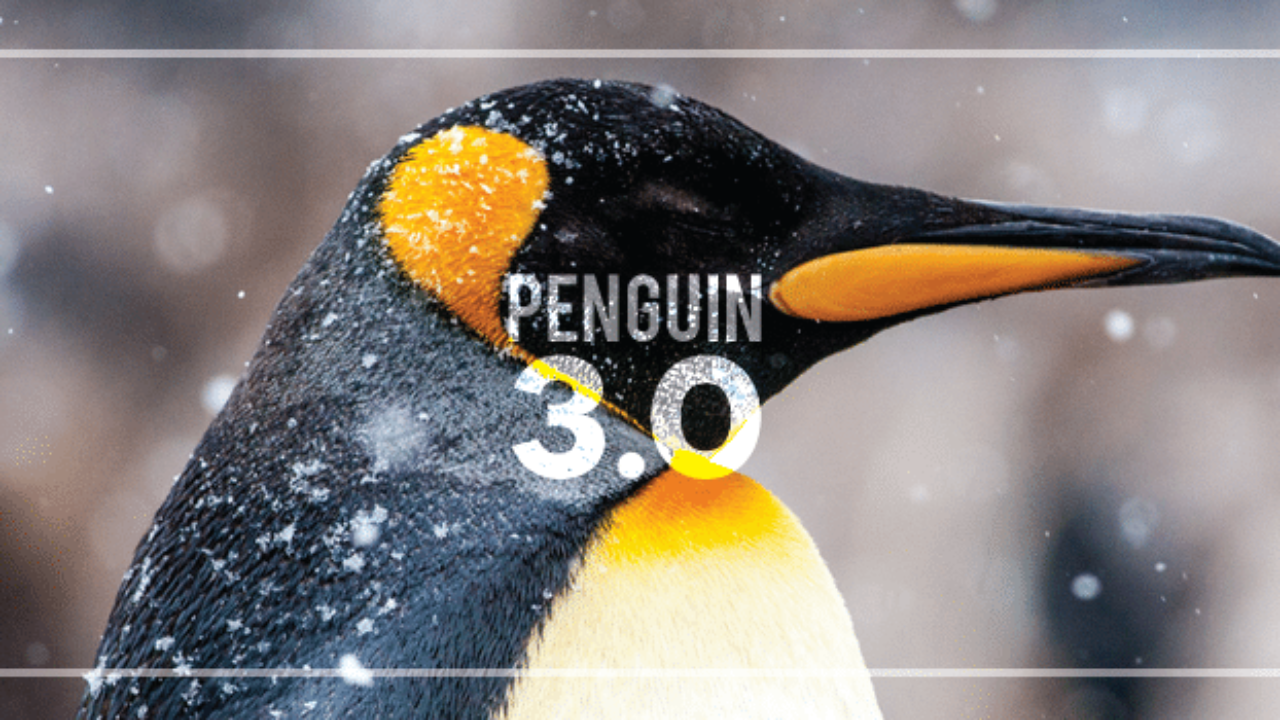
Google update: Penguin 3.0 demystified
In October, Google have released a refresh to its infamous Penguin update. To those unfamiliar with Penguin this relates to a Google’s algorithm update around assigning penalties to those websites part taking in unethical and unnatural link building practices.
Google Penguin 3.0 update
It is worth noting the Penguin update has been around a while; however there have been several releases of the algorithm update over the past 2 years.
Here are dates of all Penguin releases:
Penguin 1.0 on April 24, 2012 (impacting ~3.1% of queries) Penguin 1.1 on May 26, 2012 (impacting less than 0.1%) Penguin 1.2 on October 5, 2012 (impacting ~0.3% of queries) Penguin 2.0 on May 22, 2013 (impacting 2.3% of queries) Penguin 2.1 on Oct. 4, 2013 (impacting around 1% of queries) Penguin 3.0 on October 17, 2014 (impacting around 1% of queries)
What Penguin means Link building has been common place in SEO for many years now and the purpose is to gather links to your website from other websites in order to build authority to your site and referral traffic (think of each external link as a “vote”). The higher your authority (from votes from external high authority sites) the higher you could rank in search engines such as Google.
However, in the past many people saw an opportunity to abuse this system and simply build and pay for links everywhere and in great quantity.
Google, in the name of relevancy, had to act to punish those who were playing the system. The original Penguin update targeted those who conducted “black hat” link building practices and were not adhering the Webmaster Linking Guidelines. These guidelines include:
* There will be no buying or selling of links that pass PageRank (Google’s algorithm for managing the ‘top’ pages on Google) * There will be no excessive link trades (no black market link trading, people) * There will be no marketing campaigns that incorporate excessive spam anchor-linking (words with URL hyperlinks) * There will be no usage of automated services which create spammy backlinks to your website(s) * There will be no segments of text with excessive anchor text (i.e. Halloween is around the corner. Have you received your costume yet? You could be a goblin, a witch, a Succubus, and more. This scary holiday is not for the faint of heart.) * There will be no low-ranking directory or bookmark links to your site * There will be no embedding of low-quality links in widgets on your website and blog * There will be no embedding of low-quality links in your website/blog header or footer * There will be no embedding of low-quality links in your comments on websites, blogs, or social media
Sites that were seen to be adopting these practices above and gained from these “fake votes”— as Google would consider them — lost that credibility and thus potentially visibility by being penalised and even banned for the Google search engine results. A devastating blow for any organisation and a pretty harsh punishment that showed Google means business for outing those who are not playing by the rules.
Some people have seen website rankings drop even though they themselves were not hit by Penguin. This was due to sites they were linking from being affected so it’s a good idea when link building to try and keep good company in those you choose to partner with.
You might be playing by the rules but if you want relevant links you need to ensure the sites you get links from are reputable too. Also if you lose “votes” from other sites as they have been taken down or penalised by Penguin then your websites authority will suffer as volume of backlinks decreases.
Who does Penguin 3.0 affect? Penguin affects any business, organisation or individual who have a website or blog.
What does Penguin 3.0 mean? Penguin 3.0 is simply a refresh of the update. The update essentially targets those who are seen to be spamming and violating the Webmaster Linking Guidelines.
Those who were hit by the previous update have eagerly been awaiting this refresh to see if their actions to remove any dodgey or spammy links has gained them favour with Google again and lifted any previous appointed penalty.
Google has also promised more frequent refreshes going forward, good news for those wishing to be re-evaluated for previous dodgy link practices and great news for those who have played by the rules all along.
How to avoid Penguin All of the activities below are considered safe and “white hat”. They will naturally build authority to your site which means your PageRank and Domain Authority will increase aiding better credibility and ranking positions in search engines.
Update your website with fresh relevant content as much as possible
Share your site using social bookmarking websites i.e. Digg, StumbleUpon, Reddit etc
Look to leverage link partnerships with relevant and authoritative websites for instance if you sponsor a charity request a write up on that charity’s website with a link back to your website
Link back to your website through other digital assets and owned social media platforms i.e. LinkedIn, Twitter and Facebook
Look to conduct ethical blogger outreach in order to syndicate authentic content and build links from external websites
Use contextual internal linking throughout your website and blog to aid onsite relevancy
#digitalmarketing #googlealgorithm #penguin #penguin30 #googleupdate #linkbuilding #antispam #linkfarms