
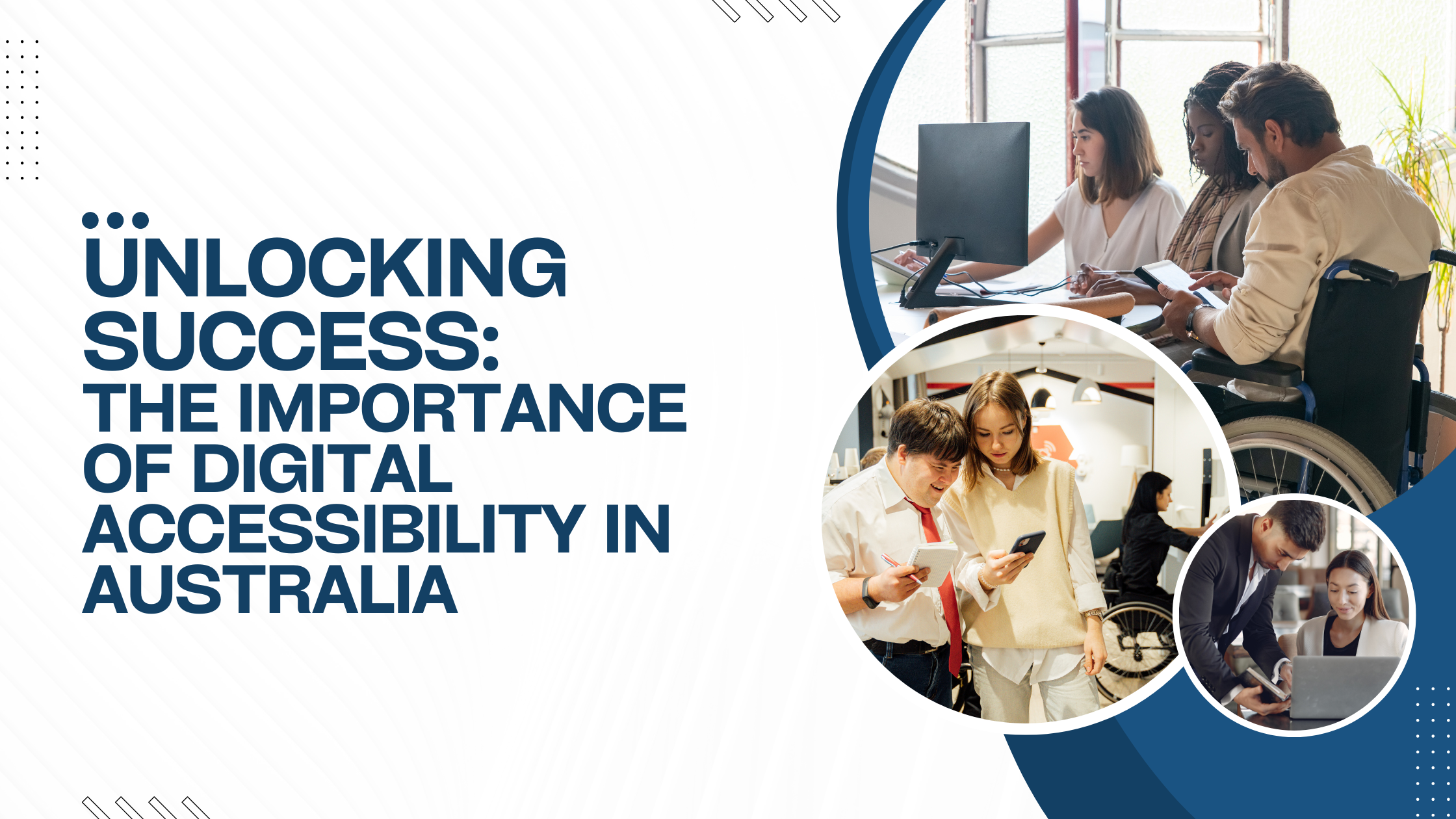
Unlocking Success: The Importance of Digital Accessibility in Australia
Accessibility isn't just good practice; it's imperative for businesses and organisations worldwide. In Australia, as in many other countries, the call for digital accessibility has grown louder in recent years. To address this need, accessibility standards such as those set forth by the World Wide Web Consortium (W3C) have become paramount.
Understanding Digital Accessibility:
Digital accessibility is the practice of ensuring that digital content, such as websites, applications, and documents, can be used effectively and without barriers by people with disabilities. Disabilities encompass a wide range of conditions, including visual, auditory, cognitive, and motor impairments. By designing digital content with accessibility in mind, businesses can ensure that everyone, regardless of their abilities, can access and interact with their online offerings.
W3C and Web Content Accessibility Guidelines (WCAG):
The World Wide Web Consortium (W3C) is a global organisation dedicated to developing and maintaining web standards. One of its most influential contributions to digital accessibility is the Web Content Accessibility Guidelines (WCAG). These guidelines provide a comprehensive framework for making web content more accessible to people with disabilities. WCAG sets forth four core principles that digital content should be perceivable, operable, understandable, and robust. These principles are further elaborated into specific success criteria, which are organised into three conformance levels: A (the minimum), AA, and AAA (the most stringent).
The Importance of W3C Standards:
Legal and Ethical Compliance: In Australia, as in many other countries, there are legal obligations to provide accessible digital content. The Disability Discrimination Act of 1992 (DDA) makes it unlawful to discriminate against individuals with disabilities, and this extends to digital services. By adhering to W3C standards, businesses can demonstrate their commitment to complying with these legal requirements and upholding ethical standards.
Broadening Audience Reach: Digital accessibility isn't just about meeting legal requirements; it's also about expanding your audience. Approximately 20% of Australians have some form of disability. By ensuring that your digital content is accessible, you open your doors to a broader customer base, potentially increasing revenue and market share while also making your brand accessible and inclusive.
Enhancing User Experience: Accessibility benefits everyone, not just individuals with disabilities. Many design principles that make content more accessible also enhance the overall user experience. For instance, clear and concise content, logical navigation, and responsive design benefit all users, leading to increased customer satisfaction and loyalty.
How to Ensure Compliance and Inclusivity in Australia:
Conduct Accessibility Audits: Begin by assessing your digital assets for accessibility compliance. This can include websites, mobile apps, and digital documents. Seek professional auditors or use automated tools to identify areas that need improvement.
Implement Accessibility Features: Based on the audit findings, take steps to make your digital content more accessible. This might involve adding alternative (Alt) text to images, providing keyboard navigation, ensuring proper heading structures, and optimising video content with captions and transcripts.
Prioritise User Testing: Involve people with disabilities in user testing to gather valuable feedback and ensure that your digital content is truly accessible. This can help identify usability issues that might be missed through automated testing alone.
Stay Informed and Evolve: Digital accessibility is an ongoing process. Stay informed about the latest WCAG updates and industry best practices. As technology evolves, so should your commitment to accessibility.
Train Your Team: Ensure that your team, from designers to developers and content creators, is educated about digital accessibility principles and how to implement them. Training can help embed accessibility into your organisation's culture.
Digital accessibility is not only a legal requirement in Australia but also a vital aspect of creating a more inclusive and successful business and brand. By adhering to W3C's WCAG guidelines and actively working towards accessibility, you can ensure that your digital presence is open to all, contributing to a more equitable and diverse online landscape while expanding your reach and potential for success in the Australian market.