Australia’s Under-16 Social Media Ban: What It Is, What It Means and Why It Matters for Digital Behaviour and Society
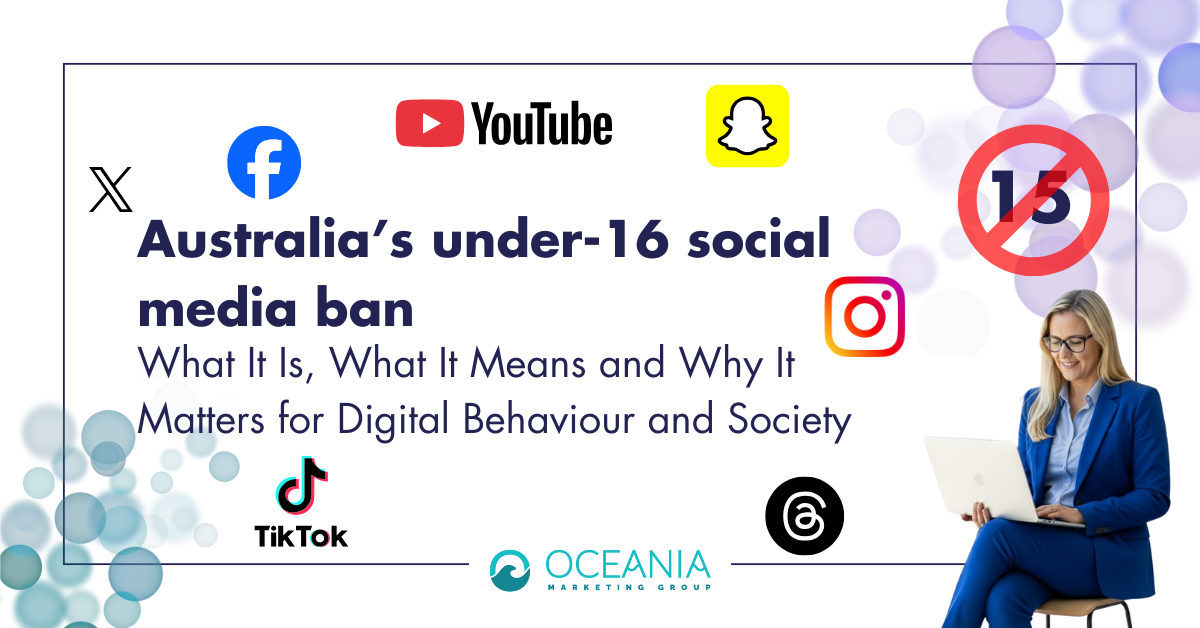
In December 2025, Australia made global headlines by becoming the first country to pass a law restricting social media access for children under 16. The Online Safety Amendment (Social Media Minimum Age) Act 2024 amends the Online Safety Act 2021 and requires major platforms to take “reasonable steps” to prevent under-16s from holding accounts or face fines of up to A$49.5 million per breach.
This is not a mere recommendation - it is a legal obligation for platforms including Facebook, Instagram, TikTok, Snapchat, YouTube, Threads, TikTok and X, which must implement age verification systems to comply.
More than 4.7 million accounts believed to belong to users under 16 were removed or restricted within the first month of enforcement, illustrating both the scale and immediacy of the change.
But what does this mean beyond the headlines? How will it affect young people’s digital behaviour, families, broader society and the way businesses think about communication strategy and online community building? Let’s unpack it.
What the Ban Actually Does
Under the new law:
Importantly, young people and parents aren’t personally penalised - the legal responsibility sits with the platforms.
This has put pressure on global companies to redesign onboarding flows and identity verification systems - a complex technical and privacy challenge. Meta (which runs Facebook, Instagram and Threads) claimed compliance but warned the policy may drive teens to alternative, less-regulated platforms and argued for broader collaboration on safer experiences rather than bans.
The Societal Rationale: Protection and Well-Being
Supporters of the law frame it as a protective measure. Government officials and child safety advocates argue that early teenage years are a sensitive developmental phase during which exposure to algorithmically amplified content - including about body image, bullying, comparison culture and addictive engagement loops - can harm mental health and well-being.
Parents and many child safety groups hoped the ban would:
This reflects a growing global concern: similar proposals are emerging in countries such as Denmark, Norway and the Netherlands, and the EU has been discussing age protections and digital duty of care standards.
The Critics: Practical, Ethical and Rights Challenges
Not everyone agrees that a blanket ban is the best solution. Critics highlight several concerns:
Enforcement Limits
Platforms and tech experts warn that age verification is hard to enforce perfectly, particularly when kids can use VPNs, borrow friends’ accounts or migrate to niche apps not yet regulated. The Guardian reported some under-16s have found alternate channels - a reminder that policy efficacy is tied to technology and user behaviour.
Social and Developmental Isolation
Even well-intentioned protections may isolate kids from positive online communities - including support groups for marginalised youth, shared interests and creative collaboration - that do not exist offline in the same way.
Rights and Free Expression
Some groups argue the ban raises digital rights questions, especially regarding political communication and access to public discourse, and have challenged aspects of the law in court.
Evidence Base
Experts also point out that the causal link between social media and mental health outcomes is complex; evidence varies by age, usage patterns and individual experiences. France and the U.S. are approaching similar issues with different balances of regulation and education.
How This Changes Digital Behaviour
The ripple effects extend beyond whether a 15-year-old can post a selfie.
1. Intentional Engagement Over Passive Consumption
Without the ease of onboarded accounts, young people may shift toward more purposeful or curated interactions - such as private groups, messaging circles or age-specific forums. This fragments digital audiences but may concentrate engagement in more meaningful contexts.
2. Digital Literacy Becomes Strategic
Understanding digital safety, content discernment and platform mechanics will become essential skills - not just for youth, but for families, educators and organisations. This elevates the role of digital education alongside regulation.
3. Age-Aware Marketing and Communication Planning
For brands and community builders, this means:
In other words, marketers must adapt to an audience that is more nuanced and potentially less algorithmically mediated.
Australia’s Under-16 Social Media Ban: Broader Societal Implications
Mental Health and Well-Being Frameworks
By legislating age limits, Australia is acknowledging that digital environments shape psychological development. This encourages families and institutions to treat digital interaction with the same intentionality as physical environments - not as a default setting but as a carefully navigated space.
Policy as a Driver of Digital Norms
As other countries consider similar laws - for example, France is moving forward with a ban for under-15s - Australia’s action may become a template for responsible tech governance that balances opportunity, risk and rights.
Digital Inequality Considerations
There is also recognition that not all young people have equal access to safe alternatives. Schools, libraries and community organisations must play a role in bridging gaps in digital literacy and access.
What This Means for Organisations and Communicators
This policy shift encourages a more strategic, humane and responsible approach to digital engagement. For organisations and marketers, this translates into:
Digital strategy must now integrate ethical considerations as core strategy, not add-ons.
Final Reflection
Australia’s under-16 social media ban marks a paradigm shift in how we think about digital life - especially for young people. It recognises that screens shape behaviour, that algorithms influence mental wellbeing, and that access matters.
Whether this law proves effective in the long term remains to be seen, but its introduction has already reshaped digital norms, sparked global debate and forced organisations to think differently about how online spaces are governed, built and communicated in.
This is not the end of social media for youth - but it is the beginning of a more intentional conversation about how society, technology and behaviour intersect in the 21st century.