A Guide to Lifecycle Marketing -Maximising Local Business Success through Lifecycle Marketing
In today's hyper-competitive business landscape, local businesses need to employ sophisticated marketing strategies to stand out and thrive. Lifecycle marketing is a powerful approach that can be tailored to promote local businesses effectively. This article delves into the concept of lifecycle marketing, emphasising its adaptation for local businesses, from customer persona development to lead nurturing, marketing automation, user journey mapping, and the implementation of multi-channel and omnichannel strategies.
Understanding Lifecycle Marketing
Lifecycle marketing is a strategic approach that divides a customer's journey into distinct stages: awareness, consideration, purchase, retention, and advocacy.
The goal is to engage customers at each stage with personalised and relevant content, thereby building stronger relationships and driving business growth.
Starting with Customer Personas
To effectively implement lifecycle marketing for local businesses, the journey begins with understanding your customers. Develop detailed customer personas by analysing demographics, behaviors, preferences, and pain points. This information will serve as the foundation for crafting personalised communications throughout the customer lifecycle.
Examples of customer persona profiles
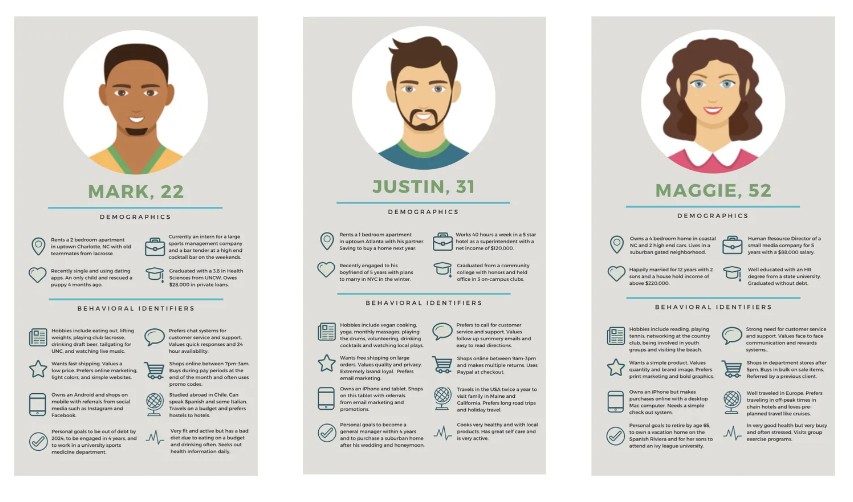
Examples of personas were produced by MyInternetScout.com.
Tailoring Communication Throughout the Lifecycle
Once customer personas are in place, it's crucial to tailor communication to match each stage of the customer lifecycle.
Awareness Stage: At this point, your goal is to make potential customers aware of your business. Use targeted advertising, social media, and local SEO to reach your audience.
Consideration Stage: Provide informative content that addresses customers' needs and pain points. Showcase your products or services and highlight what sets you apart from competitors.
Purchase Stage: Make the buying process as seamless as possible. Offer promotions or incentives, and ensure a user-friendly website with clear calls to action.
Retention Stage: Keep existing customers engaged and satisfied. Send personalised email newsletters, loyalty rewards, or exclusive offers to encourage repeat business.
Advocacy Stage: Encourage satisfied customers to become advocates. Request reviews, referrals, and testimonials to build trust and credibility in the local community.
Lead Capture and Nurturing
A typical lead capture scenario for local businesses might involve a website visitor subscribing to a newsletter to receive updates and special offers. After capturing the lead, use lead nurturing to guide prospects through the customer journey. Automated email sequences can be a game-changer here.
Marketing automation tools like MailChimp, HubSpot, or ActiveCampaign can automate lead nurturing, ensuring consistent and timely communication.
Mapping User Journeys
User journey mapping is an integral part of lifecycle marketing. It involves visualising the steps a customer takes from initial contact to conversion and beyond. Mapping user journeys helps identify touchpoints and interactions, enabling businesses to anticipate customer needs and optimise their marketing efforts.
Customer Journey Map Example
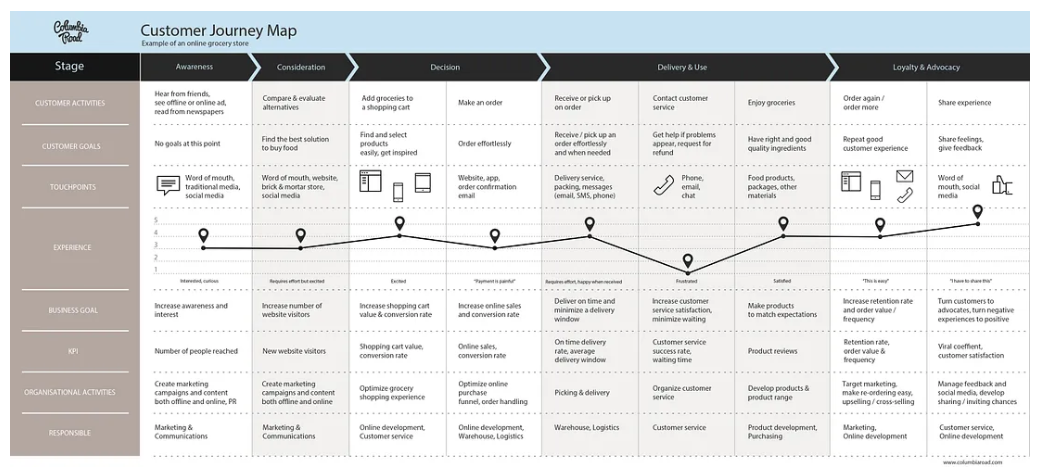
Example - Columbia Road’s Customer Journey Map showcasing the customer journey of a grocery store
Multi-Channel and Omnichannel Strategies
The final piece of the puzzle is multi-channel and omnichannel marketing. Local businesses should learn to serve the right message at the right time in the right channel to surprise and delight customers.
Multi-Channel Marketing: Utilise various marketing channels such as social media, email, SMS, and physical marketing materials to reach customers where they are most active.
Omnichannel Marketing: Seamlessly integrate these channels to provide a cohesive and personalised customer experience. For example, a customer who visits your website should receive consistent messaging across email and social media platforms.
By adopting an omnichannel approach, local businesses can enhance customer trust and increase conversion rates. The ability to interact with a business through multiple touchpoints creates a sense of reliability and commitment.
Lifecycle marketing is a dynamic strategy that local businesses can adapt to thrive in the modern marketplace. Starting with understanding customer personas, tailoring communication, and utilising marketing automation tools, local businesses can create meaningful relationships with customers.
Mapping user journeys and implementing multi-channel and omnichannel strategies will not only surprise and delight customers but also boost trust and conversion rates. Embracing lifecycle marketing is the key to achieving sustainable growth and success for local businesses in today's competitive landscape.