Top tips on creating a content calendar. Content marketing checklist and free content planner
When thinking about content marketing and content creation it can seem overwhelming and it may be hard to know where to start. The best way to approach your content strategy is to look at your audience, what platforms they use and the topics most useful to them. Also think about what you want to achieve from each piece of content and what success looks like so you can measure the impact.
Below is a quick checklist and template for developing a content calendar and what to think about.
You can start with populating it for just a few months into the future and build from there, considering any major events or reports that come out in your industry and "red letter days" that could help you plan future content for your business.
Content checklist
Calendar Format: Use a digital calendar tool (e.g., Google Calendar) or a spreadsheet (e.g., Excel or Google Sheets) to create your content calendar.
Content Types: Categorise your content by type, such as blog posts, social media updates, videos, infographics, etc.
Publishing Platforms: Specify where each piece of content will be published, such as your website, blog, Facebook, Twitter, YouTube, etc.
Publication Dates: Assign specific dates for when each piece of content will be published. Be sure to consider your audience's preferences and optimal posting times for each platform.
Content Titles/Topics: Include a column for the titles or topics of your content. This helps maintain a clear focus on your messaging. Consider topics on trend for your industry or keywords you want to be found for in search engines
Keywords/SEO: If applicable, include keywords or SEO-related notes for each piece of content to optimise search engine visibility.
Content Owners: Assign responsibility to team members or individuals responsible for creating, editing, and publishing each piece of content.
Status: Track the status of each content piece (e.g., planning, writing, editing, scheduled, published).
Performance Metrics: Include a column to track key performance indicators (KPIs) like views, engagement, conversions, or ROI for each content item.
Promotion: Note how you plan to promote each piece of content, whether through email marketing, social media sharing, paid ads, etc.
Repurposing: Identify opportunities to repurpose content across different channels or formats to maximise its reach and impact.
Content Ideas/Notes: Reserve space for brainstorming content ideas or additional notes to ensure a smooth content creation process.
Holidays/Events: Incorporate relevant holidays, events, or industry-specific dates that might inspire content ideas.
Content planner template
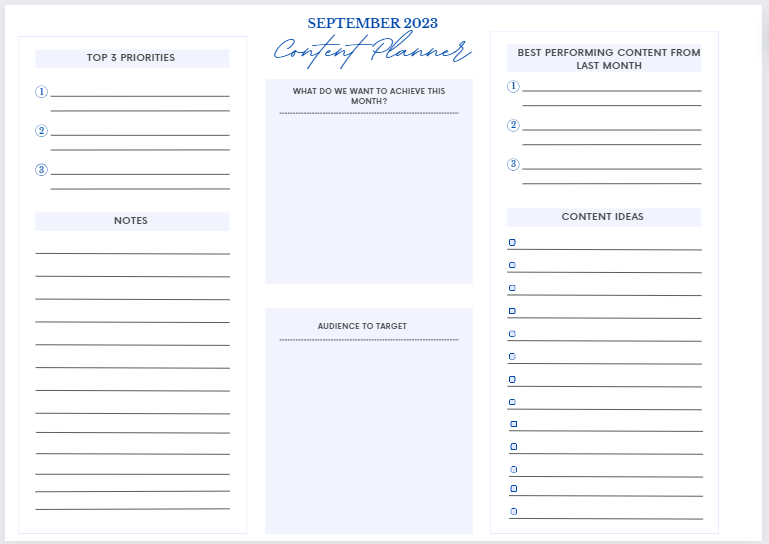
Always start planning your content with what you what to achieve in mind. Think about what content has been successful in the past and what platforms. Try to align all of this to the business priorities and think about any events within the business or industry that could fuel content ideas.
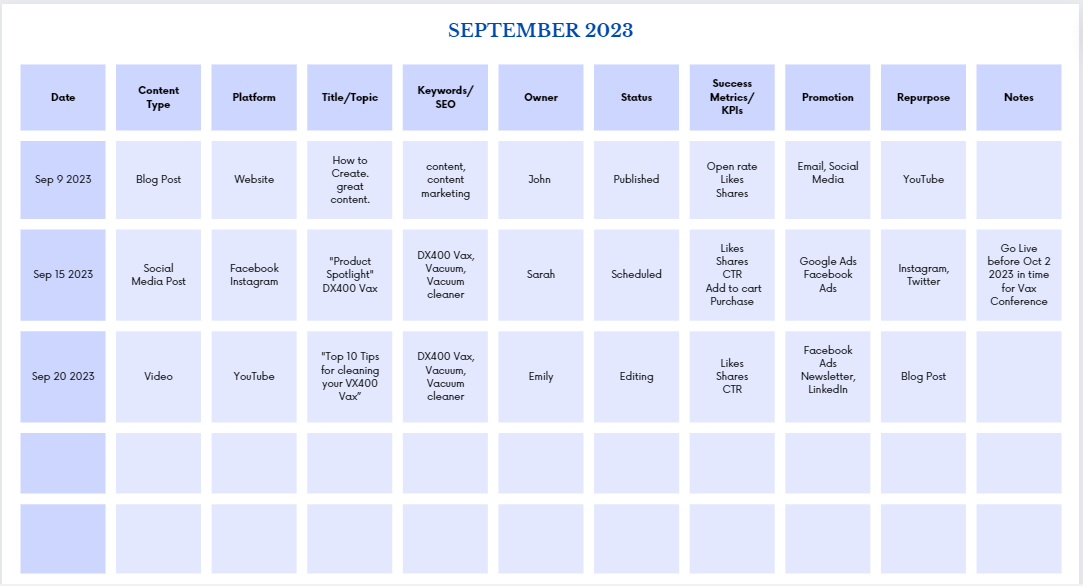
A typical content planner could look like this but there are plenty available online, If this format is useful you can download a blank PDF version.
Download your FREE Content Planner Template
Content planner ideation page
Content planner template example